Loading…
Serving Greenville, NC and surrounding areas. (252) 351-6010
Clay soil and a high water table make Greenville tough on foundations. We build slab foundations that stay solid, drain right, and pass every inspection.
Slab foundation building in Greenville, NC means grading and compacting the ground, laying gravel and a moisture barrier, placing steel reinforcement, and pouring a single thick concrete slab that serves as both the floor and structural base of your home - most residential jobs take two to four days of active work, plus a seven-day minimum curing period before any load can be placed on the surface.
Slab foundations are by far the most common choice for new construction in eastern North Carolina. The flat terrain and high water table around Greenville make digging deep foundations impractical. Whether you are building a new home, adding a garage, or putting up a substantial room addition, a properly built slab is the right starting point. If you are also planning the steps or entry features around the new structure, our concrete steps construction team can handle those details as part of a complete exterior package.
Every project starts with a free written estimate and includes permit coordination - no surprise charges, no unpermitted shortcuts.
If you are constructing a new home, garage, or room addition in the Greenville area, a slab foundation is almost certainly the right structural base. Most new residential construction in eastern North Carolina uses slab foundations because of the local terrain and water table - starting without a properly built slab means everything built on top of it is at risk from day one.
Small hairline cracks in a concrete floor are common and usually harmless. But cracks wider than the thickness of a nickel, cracks that seem to be getting longer over time, or cracks with a step pattern where one side sits higher than the other are signs the slab may have shifted. In Greenville's clay-heavy soils, this kind of movement is more common than in areas with more stable ground.
When a slab foundation shifts or settles unevenly, the frame of the house moves with it. One of the first things homeowners notice is that interior doors start dragging or exterior doors no longer latch easily. This is especially worth paying attention to after a very wet season followed by a dry spell - exactly the weather pattern Greenville sees regularly - because that wet-dry cycle is what causes clay soils to move.
White chalky residue on a concrete floor (called efflorescence), dampness underfoot, or a musty smell coming from the floor level can all signal moisture migrating up through the slab. In Greenville's high-humidity environment with its naturally high water table, this is a real and common issue. A properly built or repaired slab with a quality moisture barrier addresses it at the source.
We handle the full scope of slab foundation work in-house: permit pulling, site grading and compaction, gravel and moisture barrier installation, steel reinforcement placement, the concrete pour, surface finishing, and inspection coordination from start to finish. For homeowners who need the underground plumbing rough-in completed before the pour, we coordinate with your plumber to make sure drains and supply lines are in the right place before any concrete is placed. We also build concrete footings for projects that require isolated support points alongside a slab, and our team can advise on which approach is right for your structure and lot.
Every slab we build includes thickened edge footings along the perimeter - those are the deeper sections that carry the weight of your walls down into the ground. We do not pour a flat slab and call it done. The thickened edges are what separate a foundation that holds a building for decades from one that shifts when the soil moves.
A full reinforced slab for a new home or addition, built to local code and sized for your specific structure and lot.
Thicker pours designed for detached garages, workshops, and storage buildings where floor loads are higher.
Ideal for new homes where drain lines and water supply need to be buried before the pour - we coordinate the sequencing.
Elevated slab construction for properties in Greenville's FEMA flood zones, meeting required base flood elevation.
Greenville sits in eastern North Carolina's Coastal Plain, where the soil carries a significant clay content and the water table sits close to the surface. Clay soils expand when they get wet and shrink when they dry out - that seasonal movement is one of the primary reasons slab foundations crack and settle in this area when the ground prep is not done correctly. A contractor who skips thorough soil compaction and proper gravel drainage is setting you up for problems within a few years, not decades. Greenville also experiences heavy rainfall, tropical storm activity, and stretches of summer heat that require careful timing and monitoring during the concrete curing period. The Kinston area shares many of the same soil and drainage conditions, and homeowners there face the same questions about proper slab construction.
A meaningful portion of Greenville falls within FEMA-designated flood zones, particularly near the Tar River corridor. Homes in these zones must have their foundations elevated to a specific height above the predicted flood level - a requirement that affects both the design and the cost of the slab. We check your property's flood zone status before providing an estimate so there are no surprises mid-project. Homeowners in Jacksonville and other eastern NC coastal communities face similar elevation requirements, and our team knows how to build to those standards. According to the Portland Cement Association, proper moisture management and sub-grade preparation are the most critical factors in long-term slab performance - exactly what the local soil conditions here demand.
We visit your lot before quoting anything. Soil conditions, drainage, lot slope, and flood zone status all affect what your project actually involves - we account for those details in writing before any work begins. You will hear back within one business day of your first contact.
We handle the permit application with either City of Greenville or Pitt County - whichever covers your address. Permit processing typically takes one to two weeks, and all required inspections are coordinated by our team, not handed off to you.
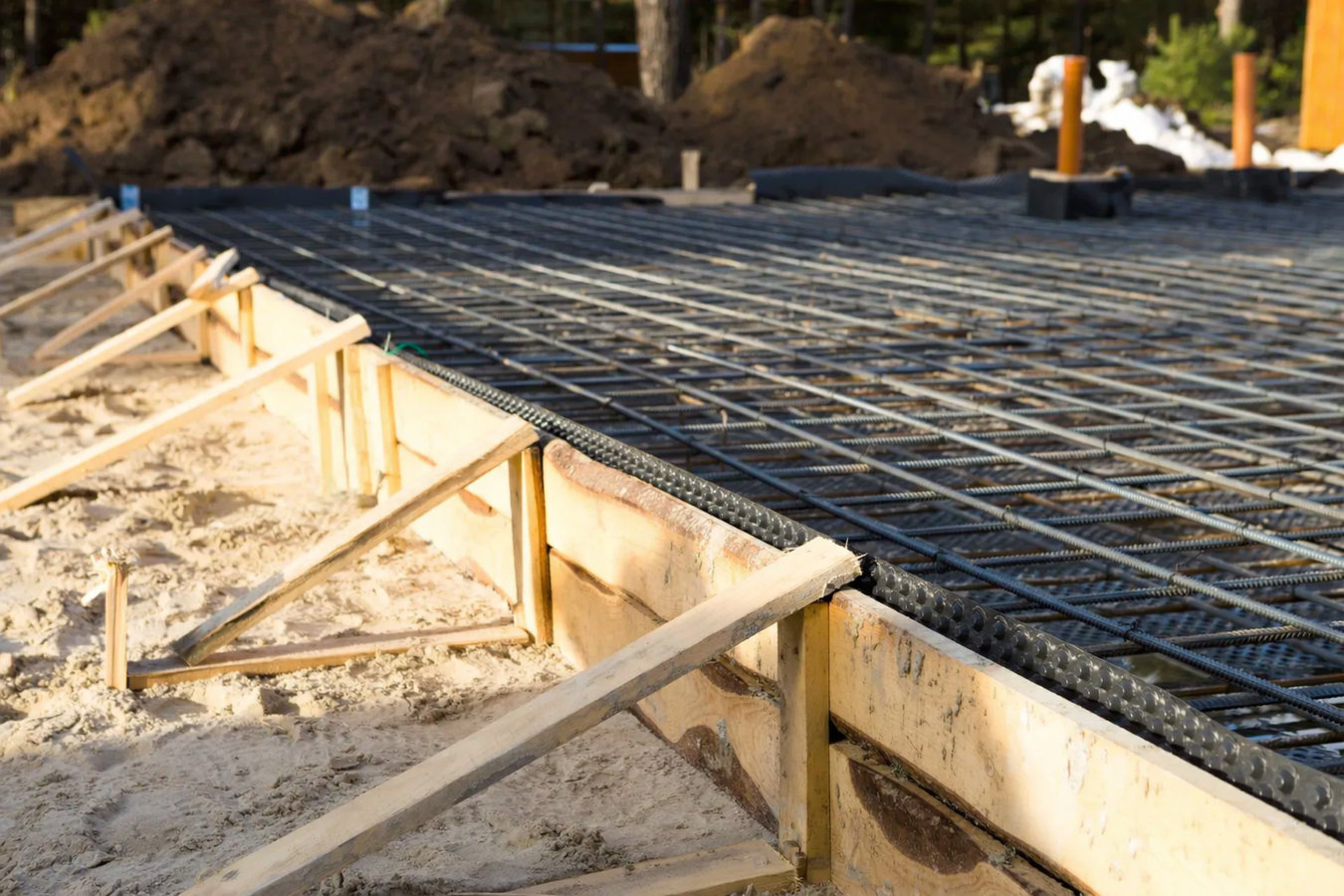
The crew grades the area, compacts the soil, lays gravel fill, installs the moisture barrier, and sets the wooden forms that shape the slab edges. If your project has underground plumbing, those lines are installed and inspected at this stage before any concrete is placed.
The concrete pour is typically one day of work. After the pour, the slab needs at least seven days of curing before any load is placed on it - we follow up with you on when each stage is complete and coordinate the final city or county inspection so your paperwork is clean.
Free written estimate. Permits handled. No pressure, no obligation.
(252) 351-6010Foundation work in Greenville requires a building permit - full stop. We handle the application, schedule every required inspection, and provide you with copies of all passed inspection records. That paper trail protects you when you sell the home or file an insurance claim, and it means a licensed inspector has verified our work before it is permanently buried.
Greenville has significant flood zone coverage near the Tar River corridor. We check your property's FEMA flood zone status before we quote, so your foundation is designed to the correct elevation from the start. Homeowners who skip this step often discover mid-project that their foundation has to be rebuilt higher - a costly and avoidable surprise. The{' '} NC Floodplain Mapping Program and local code both require us to get this right.
The clay-heavy soils in Pitt County are one of the main reasons slab foundations crack and shift in this area. Our site prep process - compaction testing, gravel drainage layer, moisture barrier installation - addresses those local conditions specifically, not generically. A slab built on properly prepared ground in Greenville soil performs very differently from one that was rushed through prep.
We work throughout eastern North Carolina, from Greenville and Kinston to Raleigh and Wilmington. That range of local experience means we know the soil and drainage conditions across the region - not just in one neighborhood. Whatever your lot conditions look like, we have likely built on something similar nearby. The{' '} American Concrete Institute sets the standards our work is built to.
Every slab foundation we build is treated as a long-term investment, not a one-day job. Getting the ground prep, the permits, and the flood zone requirements right the first time is what separates a foundation that holds for decades from one that shows problems within a few years.
For North Carolina licensing requirements and contractor verification, visit the NC Licensing Board for General Contractors. For permit and inspection requirements in Greenville, visit City of Greenville Development Services.
Full foundation installation for new homes and structures, covering both slab and crawl space foundation types with proper permits and inspections.
Learn moreIsolated concrete footings for posts, columns, and structures that need targeted load-bearing support points alongside or beneath a slab.
Learn moreSpring permits fill up fast - lock in your project date now and get a free written estimate with no obligation.