Loading…
Serving Greenville, NC and surrounding areas. (252) 351-6010
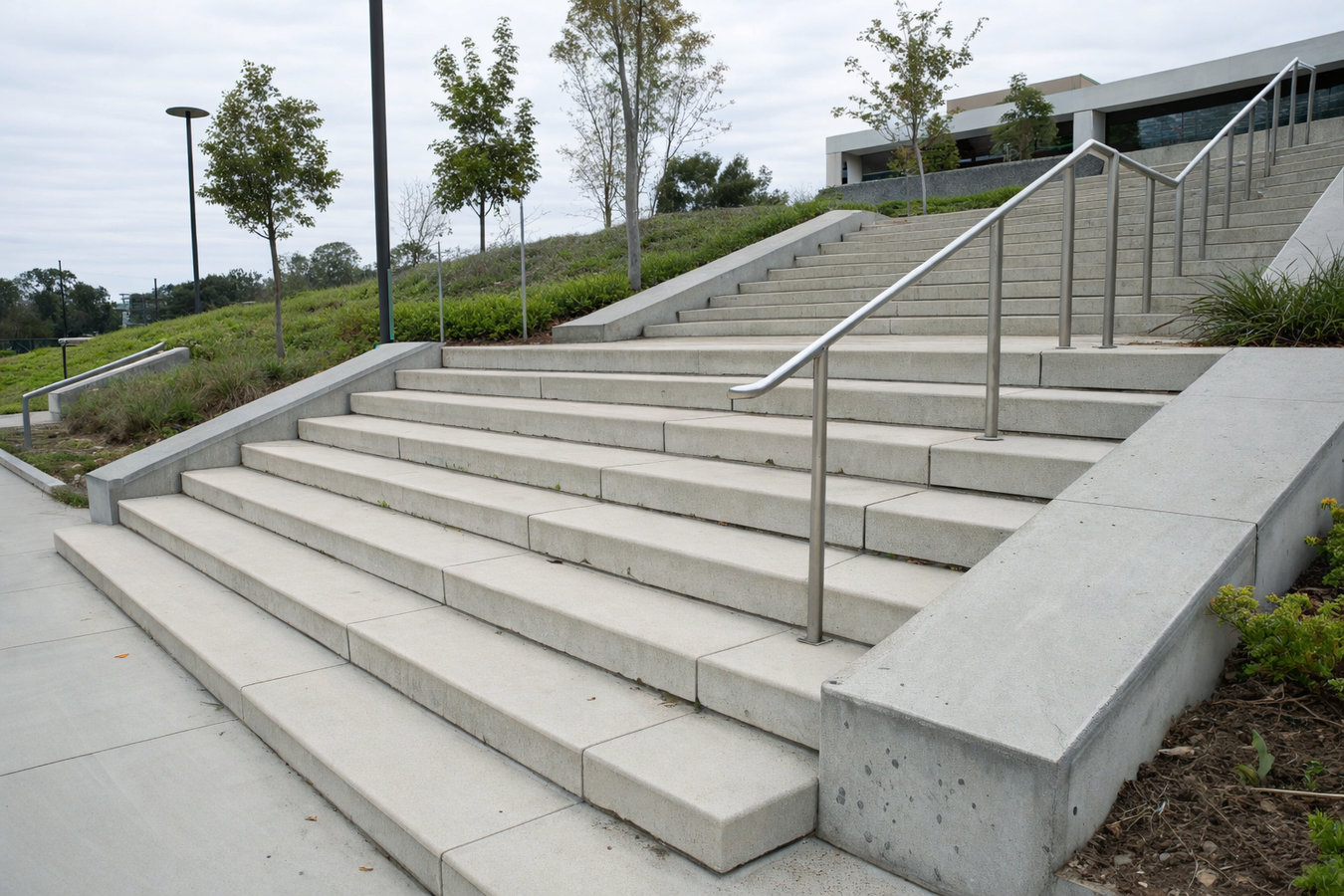
Crumbling or tilted front steps are a safety hazard and a curb appeal problem. We build new concrete steps that drain right, stay level, and hold up through Greenville's wet seasons.
Concrete steps construction in Greenville, NC means removing your existing steps, excavating and compacting a stable gravel base to handle local clay soil conditions, and pouring new steps with the correct forward slope so water drains away from your home - most residential front-entry projects take one to two days of active work, plus a seven-day curing period before normal use.
Most homeowners in Greenville call us because their existing steps have cracked, tilted, or started sending water toward their foundation after every rain. The clay-heavy soil across Pitt County is one of the main reasons steps fail here - it shifts with every wet season, and when the base underneath was not prepared correctly, those shifts show up fast in the finished concrete. If your project also includes a retaining wall or grade change near the entry, our concrete retaining walls team can handle both scopes as part of the same project.
Every estimate is written and covers demolition, base preparation, the pour, any handrail requirements, and the permit - so you know the full cost before any work begins.
Small hairline cracks are normal as concrete ages, but when a crack is wide enough to catch your fingertip or the edges have started to separate, the structural integrity of the step is compromised. In Greenville, these cracks appear most often at corners and edges where the base has shifted under the clay soil. Patching at this stage is typically a short-term fix - replacement is the more reliable answer.
If any step moves when you put weight on it, or the whole staircase has tilted forward or to one side, the base underneath has shifted. This is a safety issue, not just a cosmetic one. Eastern North Carolina's wet climate means soil movement under steps is one of the most common reasons Greenville homeowners call a concrete contractor.
When the surface of a step starts to flake off in thin layers or the edges crumble when pressed, the concrete is past its useful life. This kind of breakdown is accelerated by years of rain and humidity - both of which Greenville gets in abundance. Steps in this condition are also a trip hazard, especially for older visitors.
If you see a puddle forming at the base of your steps or right at your threshold after a heavy rain, your steps are no longer draining correctly. It can mean the slope has shifted, or that the steps have sunk slightly toward the house. Left alone, that standing water will eventually work its way under your door or into your foundation - a much bigger problem than new steps.
We handle the full project scope - permit, demolition of your existing steps, excavation and gravel base compaction, concrete pour, surface finishing, and cleanup. Every set of steps is formed and poured with the correct forward slope so rainwater runs off rather than pooling at your threshold. For homeowners who are also updating their front walkway or connecting to a driveway, we build slab foundations and concrete pathways so the entire front entry looks and functions as a finished unit.
Surface finish options include plain gray concrete with a broom texture - the most practical choice in Greenville's rainy climate because the texture gives your feet something to grip on wet surfaces - as well as stamped patterns and colored stains for homeowners who want a more refined look. If your entry height triggers the North Carolina building code requirement for a handrail, we handle that conversation before the project starts and can coordinate the rail installation alongside the pour. After everything cures, we walk through the finished steps with you and explain simple maintenance steps, including sealing, that will extend the life of your investment.
Full removal of failed steps, base excavation and compaction, and a fresh pour - the right solution when patching or resurfacing is no longer enough.
Poured-in-place steps for homes that currently have no formal entry structure or are upgrading from wood or brick.
Broom texture, stamped pattern, or colored stain for homeowners focused on curb appeal alongside function.
Code-compliant metal or wrought-iron rail added at pour time for entries that require or benefit from one - far easier to integrate now than after the concrete sets.
Greenville's soil is clay-rich across Pitt County, and that clay behaves unpredictably through the seasons - swelling after a heavy rain and contracting during summer dry spells. That movement is the single biggest reason concrete steps in eastern North Carolina crack and tilt sooner than they would in other parts of the state. Skipping proper base preparation in this soil type is the most common shortcut that leads to a failed project within a few years. Many of the homes we work on in Greenville's established neighborhoods near East Carolina University and along older corridors like Greenville Boulevard were built in the 1960s through the 1980s, and their original concrete steps have long since hit the end of their useful life. Homeowners in Kinston face the same clay soil conditions and see the same early failures when the base is not addressed correctly.
Greenville also averages around 50 inches of rain per year, and the flat terrain of the coastal plain means water does not naturally move away from structures on its own. A set of steps with even a slight tilt toward the house will send water straight to your threshold and, over time, toward your foundation. Getting the drainage slope right is not a minor finishing detail - it is a structural decision that affects your home beyond just the steps themselves. The City of Greenville requires a building permit for this type of structural concrete work, and the inspection that comes with that permit is an independent check that the work was done correctly. We pull that permit on every project before a shovel goes in the ground. Homeowners in New Bern and surrounding communities see the same rainfall patterns and benefit from the same drainage-first approach on every steps project.
Reach out by phone or through the contact form and we will respond within one business day. We schedule a quick on-site visit to look at your existing steps, check the site conditions, and talk through finish options and any handrail requirements before giving you a written quote.
We handle the permit through the City of Greenville Inspections Division before any work begins - typically a few business days. Once the permit is in hand, you get a confirmed start date and a clear project timeline so you can plan around the front entry being unavailable.
On day one, we break up and haul away your old steps - this part is loud and takes a few hours. After demolition, we excavate down to stable soil, compact a gravel base, and set wooden forms that give the new steps their shape. This prep work is what keeps your steps level for the next 25 to 30 years.
The crew pours and finishes the concrete, including the surface texture you chose and any handrail anchors. The steps need at least 24 to 48 hours before light foot traffic and a full week before normal use. We walk through the finished project with you before we leave and explain how to care for the surface going forward.
We pull the permit, handle the base prep, and leave your front entry clean and level. Reach out now for a free written estimate - we typically respond within one business day and can usually schedule within days of approval.
(252) 351-6010Clay-heavy soil is the main reason concrete steps fail early in this area. We excavate down to stable ground, compact a gravel sub-base, and set forms correctly so your steps have a foundation that resists seasonal soil movement. This is the step most contractors rush - we do not.
We pull the required City of Greenville building permit before any concrete is poured. That means your steps are inspected and on record, which protects you at resale and with your homeowner's insurance. You can verify our license at any time through the{' '}NC Licensing Board for General Contractors.
Greenville gets around 50 inches of rain per year, and steps that drain toward the house create real problems over time. Every set of steps we build is sloped correctly so water moves off the surface and away from your threshold - a detail that matters every single time it rains.
We have built and replaced steps on homes throughout Greenville - from older brick ranches near East Carolina University to newer subdivisions on the south and west sides of the city. That local experience means we know what to expect from the soil, the drainage patterns, and the permit process in each part of town.
Good steps are simple in concept but easy to get wrong without the right base prep and drainage slope. For independent guidance on concrete construction standards, the American Concrete Institute publishes the technical standards every reputable contractor follows, and the NC Department of Insurance Building Codes division is the state authority on handrail and stairway requirements that apply to your project.
When your project goes beyond steps to include a slab or structural base, our foundation team handles the full scope with the same drainage-first approach.
Learn moreGrade changes near your front entry or walkway can be stabilized with a concrete retaining wall built to handle Greenville's clay soil and heavy rainfall.
Learn moreWe pull the Greenville permit, prepare the base correctly for local soil conditions, and leave your front entry clean, level, and draining right - call now or request a free written estimate to get started.