Loading…
Serving Greenville, NC and surrounding areas. (252) 351-6010
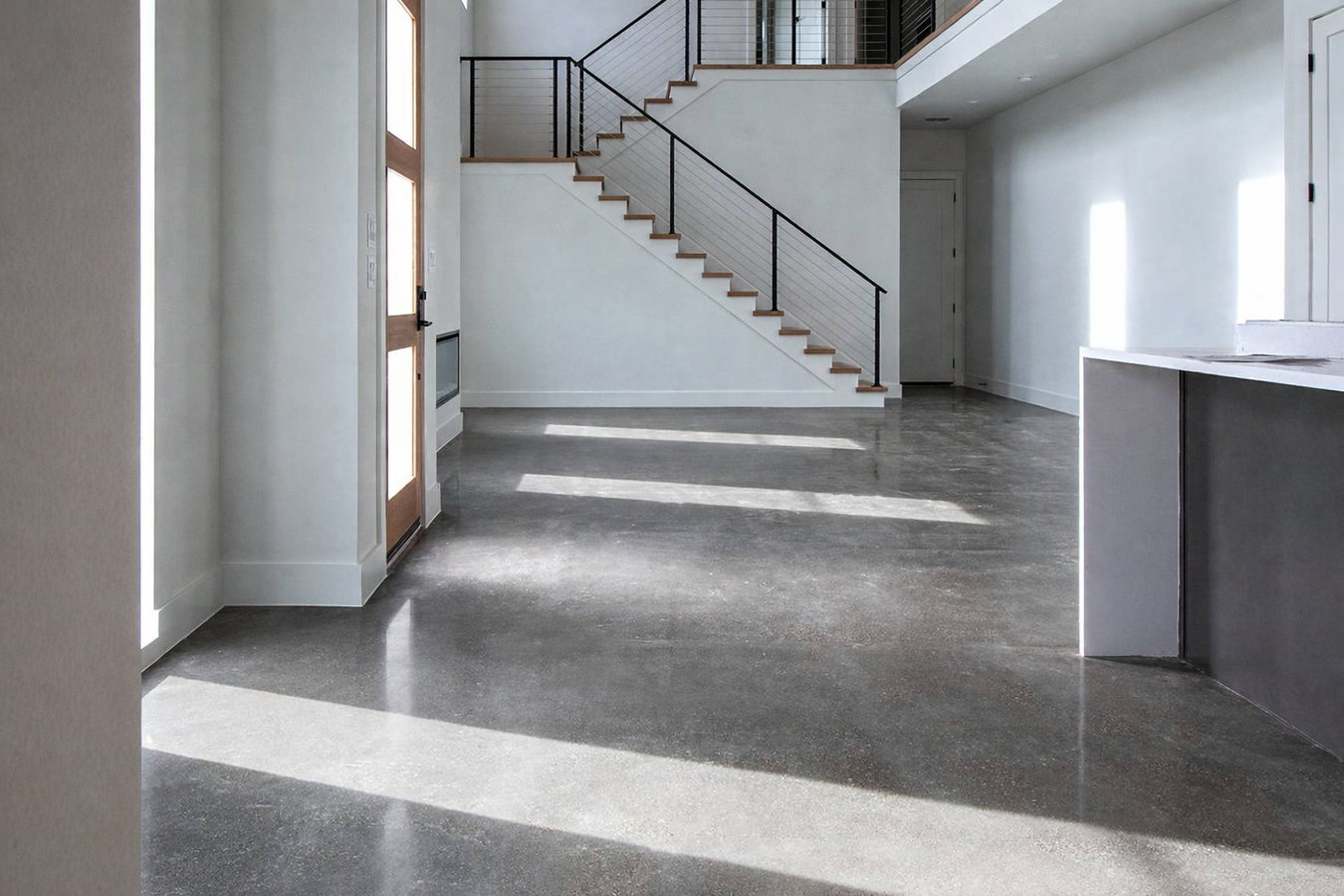
Cracked, uneven, or crumbling garage floors are a real problem in Greenville's clay soil. We pour floors built for local conditions - from base prep to surface finish.
Concrete floor installation in Greenville, NC starts with preparing the ground - grading, compacting the sub-base, and adding a gravel layer before any concrete is poured - then placing and finishing a reinforced slab suited to your space and use. Most residential pours are completed in a single day, with a 24- to 48-hour wait before foot traffic and about a week before vehicles or heavy equipment.
A lot of Greenville homeowners come to us after noticing cracks spreading across a garage floor, puddles forming after rain, or a surface that has started to flake and crumble. Many of those problems trace back to inadequate base preparation when the floor was first poured. Pitt County's clay-heavy soil holds moisture and moves with the seasons - a floor poured directly onto poorly compacted clay is fighting an uphill battle from day one.
If you are thinking about converting a garage or outbuilding into a workspace, our garage floor concrete service handles those projects with the finish options that work best for drive-on surfaces. Every project starts with a free written estimate based on an actual site visit.
Hairline cracks are normal, but cracks wide enough to catch your finger - or sections where one side sits higher than the other - mean the slab underneath is shifting. In Greenville's clay-heavy soil, this kind of movement is common as the ground absorbs and releases moisture. Left alone, those cracks grow wider and can eventually compromise what sits on top of the floor.
A properly poured concrete floor is slightly sloped so water drains toward an exit. If puddles form in the middle of the space or near the walls after it rains, the slab has settled unevenly or was never graded correctly. In Greenville's flat terrain, drainage problems like this tend to get worse over time, not better.
When the top layer starts chipping away - called spalling - the surface was either mixed or cured incorrectly, or it has spent years absorbing moisture without protection. You will see rough, chalky patches where the floor used to be smooth. Once spalling starts, it spreads, and patching only goes so far before full replacement is the smarter call.
Many Greenville homes built in the 1970s and 1980s have original concrete floors in garages and utility rooms that have never been replaced. After three decades of Greenville's humidity, temperature swings, and regular use, those slabs are often past the point where repairs are cost-effective. If your home is from that era and the floor looks rough or uneven, a contractor visit is worth the time.
We handle every step in-house: removing the old slab if needed, grading and compacting the sub-base, laying a gravel layer suited to Greenville's clay conditions, placing reinforcement, and pouring and finishing the slab to the thickness and texture your space needs. For homeowners working on exterior areas around the same property, we also install concrete pool decks so the interior and exterior pours can be coordinated under one contractor.
Thickness matters more than most homeowners realize. A floor built for a workshop or garage needs to handle heavier loads than a basic utility room slab. The National Ready Mixed Concrete Association recommends homeowners ask specifically about slab thickness and reinforcement before any work begins - those two decisions affect long-term performance more than almost anything else. We include that conversation in every estimate so you know exactly what you are getting before anyone picks up a shovel.
A 4-inch reinforced slab for garages, utility rooms, and storage spaces - the most common solution for Greenville homes replacing an aging original floor.
A 5- to 6-inch slab for workshops, home gyms, or spaces that will hold heavy equipment, vehicles, or shelving with significant weight.
A slab graded toward a floor drain or exterior exit - important for car wash bays, utility rooms, and any space where water management matters.
A self-leveling overlay over an existing slab that has settled unevenly - useful when the original concrete is still structurally sound but the surface is no longer level enough for the planned use.
Greenville's coastal plain location means two persistent challenges for concrete floors: flat terrain that drains slowly, and clay-heavy soil that holds moisture and moves with the seasons. A gravel sub-base is not optional here - it is the buffer between a moving clay substrate and a concrete slab that needs to stay put. Contractors who skip that step often produce floors that look fine the first season and start cracking by the second or third. Summer heat and high humidity add another layer of complexity: freshly poured concrete can dry too fast on the surface before it has cured properly underneath, which weakens the finished slab. Homeowners in areas like Rocky Mount and Wilson face the same soil and humidity conditions - proper base prep and timing are critical across the whole region.
Greenville's housing stock adds another dimension. A large share of the city's homes were built between the 1960s and 1990s, and many of the original garage and carport floors from that era are now reaching the end of their useful life. Replacement pours in older homes often require more prep work than new construction - the existing ground has settled, soil conditions may have changed, and there is sometimes evidence of past moisture problems that need to be addressed before the new floor goes in. This is work we understand and handle routinely across Greenville.
We ask a few basic questions about the space and schedule a time to come look in person. Most written estimates are delivered within one business day of that visit. We will not give you a price until we have seen the ground conditions and existing slab - those factors change the scope too much to estimate from a phone call.
We determine whether your specific project requires a permit from the City of Greenville Inspections Division or Pitt County. If it does, we handle the application. Permitted work gets inspected by a third party - that inspection protects you if you ever sell the home or need to make a warranty claim.
The crew removes the existing slab if needed, grades and compacts the sub-base, and lays a gravel layer before any concrete is poured. This prep work often takes most of a morning - it is where the long-term quality of the floor is determined, not during the pour itself.
The concrete truck arrives and the crew places, spreads, and finishes the slab in a few hours. Before we leave, we give you written curing instructions - including exactly when the floor is ready for foot traffic, vehicles, and heavy use. You will not have to guess.
Free written estimate. No obligation. We handle permits and base prep for Greenville's clay soil conditions.
(252) 351-6010We include a compacted gravel sub-base on every floor pour we do in Greenville - not as an add-on, but as a baseline requirement. Clay soil that moves with moisture is one of the most common reasons floors crack early, and addressing it before the pour is far cheaper than fixing the consequences after.
Whether your project requires a permit from the City of Greenville Inspections Division or Pitt County, we handle the application. You do not have to navigate that process yourself or wonder whether it was done correctly. The permit also protects your home's value at resale.
Summer pours in Greenville require early morning scheduling and active curing management to prevent the surface from drying too fast in the heat and humidity. We plan for local conditions on every job - not a generic schedule that assumes a dry, moderate climate.
North Carolina requires contractors performing work above a certain dollar threshold to hold a license from the NC Licensing Board for General Contractors. You can verify license status on the Board's website before signing anything - that transparency is part of how we operate. The{' '} American Concrete Institute also publishes standards for floor construction that inform how we design every pour.
Every concrete floor we install is built with Greenville's specific conditions in mind - the clay soil, the humidity, the older housing stock, and the drainage challenges that come with flat eastern North Carolina terrain. A floor that holds up here is one that was designed for here.
For permit questions in Greenville, the City of Greenville Inspections Division can confirm whether your specific project requires a permit before work begins.
Pair an interior floor installation with a coordinated exterior pool deck pour from the same contractor.
Learn moreSpecialized garage floor pours with drive-on finishes and drainage slopes designed for vehicle use.
Learn moreThe best conditions for a concrete pour in Greenville fill up quickly - contact us today for a free written estimate and get your project scheduled before the season is gone.