Loading…
Serving Greenville, NC and surrounding areas. (252) 351-6010
Your foundation carries your entire home. Greenville's clay soil and flood zones demand more than a standard pour. We handle it the right way, permitted and inspected.
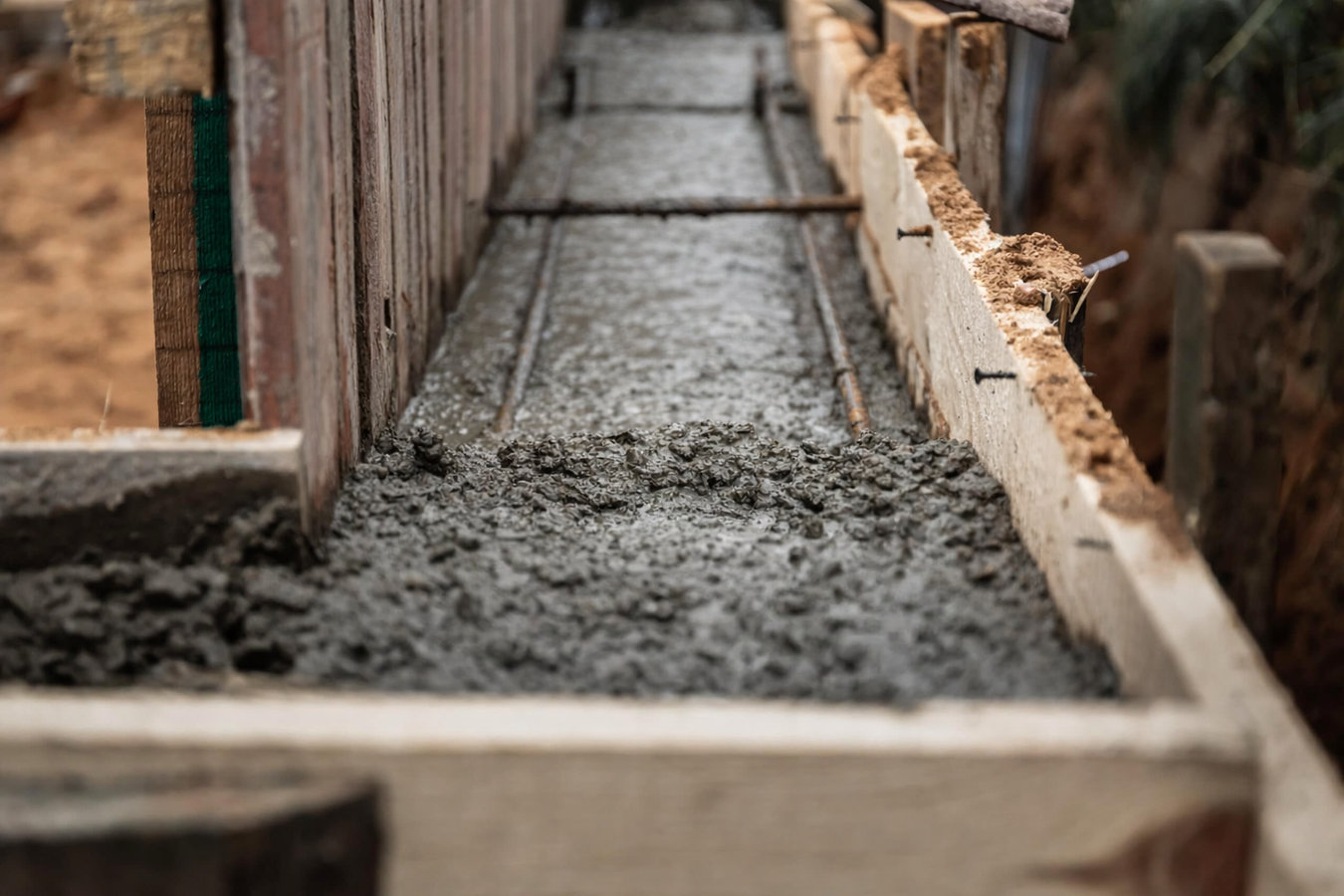
Foundation installation in Greenville, NC involves excavating and preparing the site, compacting the soil and adding gravel drainage, setting steel reinforcement and concrete forms, and pouring the concrete base that your entire home will rest on - most residential foundations take one to two weeks from permit approval through the curing period, before framing can begin.
The foundation is the single most consequential part of any new construction. Everything built above it depends on how well it was designed and installed. In Greenville, that means accounting for clay-heavy Pitt County soils, a high water table, potential flood zone elevation requirements, and the city's permit and inspection process - none of which a contractor from outside the area will know instinctively. If you are also planning a parking area or commercial surface alongside the new structure, our concrete parking lot building team handles those surfaces with the same attention to drainage and base prep.
Every foundation project starts with a free site visit and a written estimate that accounts for your specific lot, soil, and flood zone situation - no guesswork, no surprise invoices mid-project.
If doors in your home have started sticking, dragging on the floor, or leaving visible gaps at the frame corners, the structure beneath them may have shifted. In Greenville, this kind of movement is frequently tied to the clay-heavy soils that expand and contract with wet and dry seasons. It does not always mean a catastrophic problem, but it is worth having a foundation professional evaluate it before the movement gets worse.
Hairline cracks in drywall are common and usually harmless, but diagonal cracks running from the corners of windows and doors - or stair-step cracks in exterior brick - are a different story. These patterns often indicate that one part of your foundation has moved more than another. In older Greenville neighborhoods with block crawl space foundations, this kind of cracking is a common early warning sign.
Greenville's flat terrain and high water table mean water has nowhere to go quickly after a heavy rain. If you notice water pooling against your foundation walls or under your crawl space after storms, that moisture is working against your foundation every time it happens. Over years, it softens the soil, promotes mold, and can cause block or concrete walls to bow inward.
If a floor feels like it gives slightly under your feet, or if you notice a visible slope from one side of a room to another, the structure supporting that floor may be compromised. This is especially common in older Greenville homes with wood-framed crawl spaces, where years of moisture exposure weaken the supports below. A foundation contractor can tell you quickly whether the problem is the foundation itself or the wood framing above it.
We handle the full range of residential foundation work in Greenville: new slab foundations, crawl space foundations, elevated foundations required by flood zone designations, and foundation repairs on existing homes. Every project starts with a site assessment that checks soil conditions, drainage patterns, and flood zone status before a single shovel goes in the ground. For homeowners who need a complete foundation with an integral slab - including the underground plumbing rough-in - we coordinate with your plumber to make sure the sequencing is right. We also build and repair slab foundations as a standalone service for clients who have a straightforward new-construction project.
The quality of a foundation is largely determined before the concrete is ever poured. Excavation depth, soil compaction, gravel drainage, moisture barrier placement, and steel reinforcement are the steps that make a foundation last - and they are the steps that a contractor cutting corners will skip or rush. We do not take shortcuts on prep because we have seen what happens to slabs and crawl space walls five years later when someone else did.
A fully reinforced concrete slab for new homes, garages, and additions - built to code with proper drainage and moisture management from the start.
Poured concrete or concrete block crawl space walls for homes where under-floor access for plumbing and wiring is a priority.
Foundations designed to meet FEMA base flood elevation requirements - the right solution for Greenville lots near the Tar River corridor.
Suited for older Greenville homes where block or poured concrete walls have cracked, bowed, or settled beyond the point of patch repairs.
Greenville sits in the North Carolina Coastal Plain, where clay-heavy Pitt County soils expand when wet and shrink when dry. That seasonal movement is the main reason foundations crack and settle in this region when soil prep and drainage are not done correctly. The city also has a naturally high water table, and a significant portion of its neighborhoods - particularly those near Contentnea Creek, the Tar River, and the lower-lying subdivisions on the city's edges - fall within FEMA-designated flood zones. Homes in those zones must have their foundations built to a specific elevation above the base flood level. That requirement adds cost and changes the design, and a contractor who does not check your flood zone status before quoting is not giving you a real number. Homeowners in Fayetteville face similar flood zone considerations, and our team knows the requirements across eastern NC.
Greenville has a large housing stock from the 1970s and 1980s - homes that are now 40 to 50 years old and hitting the age where foundation issues become more common. Many of these homes were built on concrete block crawl space foundations that were not designed to handle decades of moisture exposure in a high-humidity climate. When the block walls start showing stair-step cracks or bowing inward, replacement is often more cost-effective than patching. Homeowners in Rocky Mount and other eastern NC cities with similar-era housing stock know this pattern well. The NC Department of Insurance Building Code Council sets the residential foundation standards that govern all work in this state, and our projects are built to meet them.
We visit your lot before providing any price. We check the slope, drainage patterns, and your property's flood zone status - all of which affect what the job actually involves and costs. Most homeowners hear back from us within one business day of their first call.
Foundation work in Greenville requires a building permit - we handle the application with City of Greenville or Pitt County, whichever covers your address. Permit approval typically takes one to two weeks, and all required inspection points are coordinated by our team from that point forward.
The crew excavates, compacts the soil, adds the gravel drainage layer, and installs the steel reinforcement and forms. Before any concrete is poured, a city inspector visits the site to verify the setup - this is a required checkpoint that protects you by having an independent set of eyes on the work before it is covered up.
The concrete pour typically takes one full day. In Greenville's summer heat, we schedule early morning starts to help the concrete cure evenly. The slab needs a minimum of seven days before any load is placed on it. We coordinate the final inspection and provide you with copies of all passed inspection records for your files.
Free site visit. Flood zone check included. Permits handled from start to finish.
(252) 351-6010A meaningful portion of Greenville falls within FEMA flood zones near the Tar River corridor. We check your property's flood zone status before we provide a price - not after. Homeowners who skip this step often discover mid-project that their foundation needs to be redesigned and rebuilt to a different elevation. We prevent that surprise by building it into our estimate process from the first site visit.
Foundation work requires a permit and at least one inspection before the pour - that inspection is one of the most important protections you have as a homeowner because it means an independent third party checks the reinforcement and formwork before everything is permanently buried. We handle every permit application and inspection coordination, and we give you copies of all passed records for your property files.
The expansive clay soils in Pitt County are the leading cause of foundation cracking and settling in this area. Our site prep process - soil compaction, gravel drainage layer, moisture barrier installation - is designed for these specific conditions, not adapted from a drier climate. We serve all 12 communities across eastern NC, so we have seen how soil and drainage conditions vary across the region.
Many of Greenville's homes from the 1970s and 1980s are on block crawl space foundations that were never designed to handle decades of coastal plain humidity. When those walls start cracking or bowing, replacement is often the right answer. We have experience working on foundation replacements in older in-town neighborhoods - not just new construction pours on open lots. See the{' '} American Society of Concrete Contractors for the standards that govern this kind of repair work.
Your foundation is the one part of your home you can never fix easily once it is wrong. Getting the soil prep, the permits, and the flood zone requirements right from the start is what we are here to do - so everything built on top of it is on solid ground.
For Greenville flood zone information, visit the NC Floodplain Mapping Program. To verify a contractor's license, visit the NC Licensing Board for General Contractors.
Durable concrete parking surfaces for commercial and residential properties, designed with the same drainage and base prep standards we apply to foundations.
Learn moreStandalone slab foundation pours for new homes, garages, and room additions - our most requested foundation type for eastern NC new construction.
Learn moreFlood zone status checked, permits handled, inspections coordinated - call now to book your free site visit before the spring building season fills up.