Loading…
Serving Greenville, NC and surrounding areas. (252) 351-6010
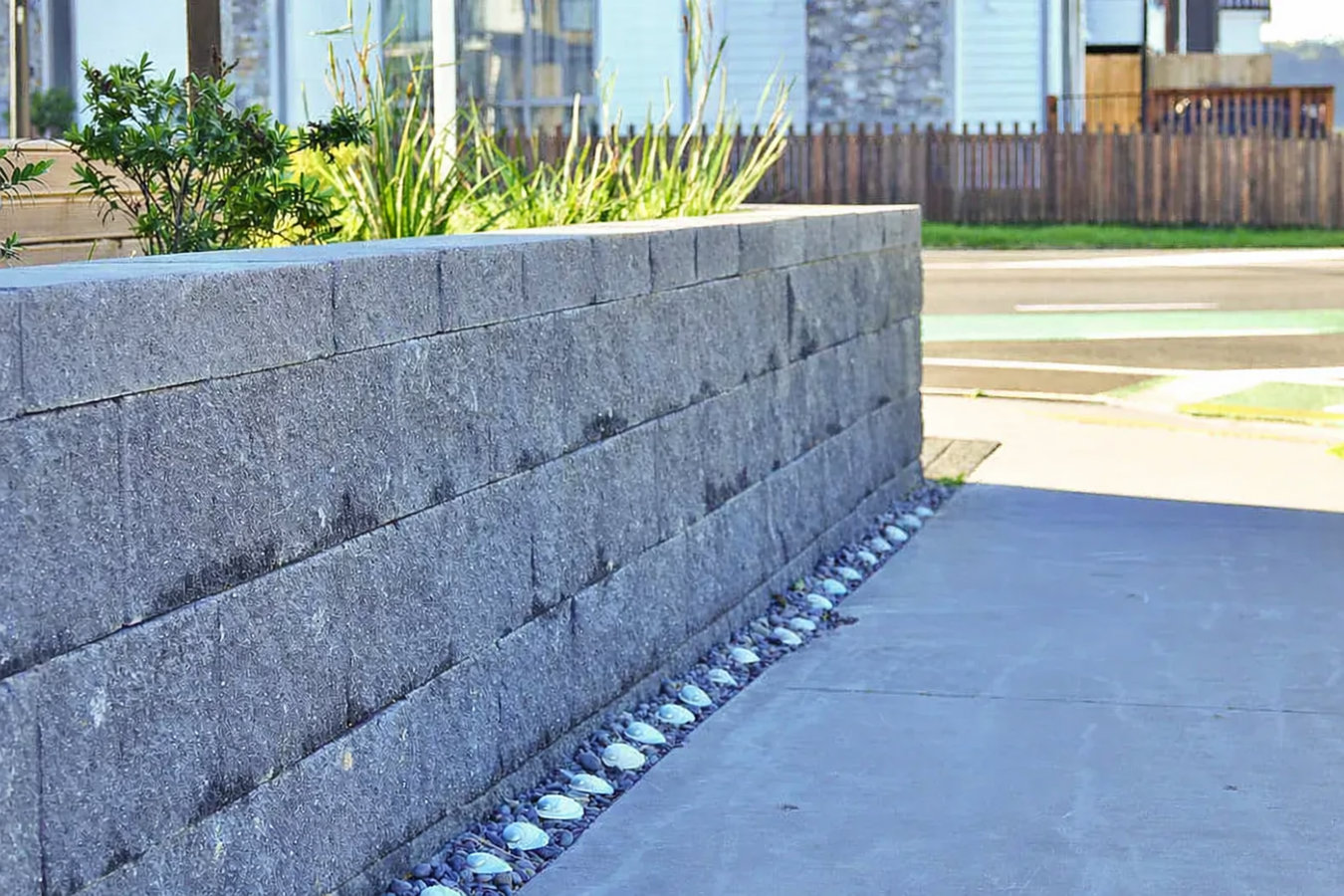
Greenville's clay soil and heavy rainfall push against slopes every season. A properly drained concrete wall protects your yard, foundation, and property value.
Concrete retaining walls in Greenville, NC hold back sloped soil using a poured concrete wall set on a compacted gravel footing with drainage behind it - most residential jobs take three to five days from excavation to backfill, with a curing period before soil can be placed against the finished wall.
Many Greenville homeowners first notice the problem after a heavy summer storm - soil washing down a slope, water pooling against the foundation, or a yard that is too steep to do anything useful with. Pitt County's clay-heavy soil and roughly 52 inches of annual rainfall make drainage design the most critical part of any retaining wall project here. Get that wrong and even a solid-looking wall will lean or crack within a few years.
If you are also dealing with stairs or steps on the slope, our concrete steps construction team handles that work in coordination with the wall so everything integrates cleanly. Every project starts with a free written estimate and a real site visit - no guessing from a phone description.
If bare patches, ruts, or sediment show up at the bottom of a slope after a storm, your soil is actively moving. In Greenville, summer storms can drop two to three inches of rain in an afternoon - that kind of erosion strips a yard quickly and gets worse each season without a wall to hold the slope in place.
A retaining wall that tilts forward or shows horizontal cracks across its face is under more pressure than it can handle. This is especially common with Greenville's clay soil, which swells and contracts with the seasons and gradually pushes against whatever is holding it back. A leaning wall will not fix itself.
If rainwater consistently collects near your house or garage foundation rather than draining away, a slope or grading problem is often the cause. That standing water works its way into your foundation over time - a much more expensive problem than a retaining wall would have been.
If part of your yard is too steep to mow safely or too uneven for a patio, a retaining wall can turn that wasted slope into a flat, usable space. Many Greenville homeowners discover they have significantly more usable yard once a wall creates a level terrace.
We handle the full project in-house: site assessment and permit pulling, excavation, compacted gravel base, drainage layer with weep holes or French drain as needed, formed and poured concrete wall with steel reinforcement, and final backfill once curing is complete. For properties where the retaining wall connects to interior or exterior concrete surfaces, we also build concrete floor installations so the whole project finishes as a single coordinated job rather than separate contractors working around each other.
Drainage is never treated as optional on our jobs. Every wall we build includes a gravel backfill layer and drainage openings sized for Greenville's rainfall volume. For taller walls that require a permit from the City of Greenville Development Services office, we handle the permit application and inspection coordination so that step does not fall on you. The Federal Highway Administration recognizes proper drainage as the leading factor in retaining wall longevity - we take that seriously on every project.
A formed and reinforced concrete pour - the most durable and long-lasting option for slopes with significant soil pressure or Greenville's expansive clay conditions.
Multiple shorter walls stepping up a steep slope - useful when a single tall wall would require extensive engineering or when you want to create usable planting or patio terraces.
Full drainage re-engineering behind an existing or new wall - the right call when the current drainage has failed or was never installed correctly.
Complete removal of a failing wall, re-excavation, updated drainage, and a fresh pour - for walls that have leaned or cracked past the point of repair.
Much of Pitt County sits on expansive clay soil that swells when it gets wet and shrinks when it dries out. That constant movement puts extra lateral pressure on retaining walls - which means drainage is not a nice-to-have, it is the difference between a wall that lasts decades and one that tilts or cracks within a few years. Greenville also averages around 52 inches of rain per year, with the heaviest rainfall concentrated in summer and during hurricane season. A wall without a clear path for water to escape is being set up to fail. Homeowners in newer subdivisions near Wilson and established neighborhoods near Kinston face the same soil and rainfall conditions - proper drainage design is non-negotiable across the region.
Eastern North Carolina also sits in the path of Atlantic hurricanes and tropical storms. Greenville has seen serious flooding events from storms like Floyd and Matthew, and if a slope is already showing erosion or movement, getting a wall in place before June - when the Atlantic hurricane season officially begins - is genuinely smart timing. The city's older housing stock, with many homes built in the 1960s through 1980s, means a lot of yards that were never properly graded are now showing the consequences: slumping slopes, washouts near older foundations, and walls built without adequate drainage that are starting to lean. These are real and fixable problems with the right approach.
We come to your property to look at the slope, soil, drainage, and nearby structures before giving you a price. A quote based only on a phone description is rarely accurate for retaining wall work - we will not ask you to commit to a number until we have seen the site. You will have a written estimate within one business day of that visit.
If your wall is tall enough to require a permit from the City of Greenville Development Services office, we handle that application before any digging begins. This can add a week or two to the start date, but it protects you: a permitted wall is inspected and documented, which matters if you ever sell your home.
The crew excavates the wall footprint, compacts a gravel base, and installs drainage material behind where the wall will sit. This prep work often takes more time than the concrete pour itself - and it is where the long-term quality of the job is determined. We call NC 811 before any digging to have utilities marked.
Forms are set, reinforcement is placed, and the wall is poured. After curing - at least a week before any soil is placed against it - we backfill, restore the grade, and clean up the site. You will know exactly when the work is complete and the area is safe to use again.
Free written estimate. We handle permits and drainage design. No pressure, no obligation.
(252) 351-6010We install gravel backfill and sized drainage openings on every retaining wall we build - not just on the jobs where it seems obvious. Greenville averages about 52 inches of rain per year, and water management is the single biggest factor in whether a wall lasts 5 years or 50.
Retaining walls above a certain height require a permit from the City of Greenville Development Services office. We pull that permit before the first shovel goes in the ground and coordinate the inspection. You get a permitted, documented wall without the paperwork headache.
Pitt County's expansive clay soil behaves differently than sandy or loamy ground - it moves with moisture cycles and puts ongoing lateral pressure on any wall sitting in it. We design our bases, drainage, and reinforcement specifically for those conditions, not a generic spec from somewhere drier.
North Carolina requires contractors above a certain dollar threshold to hold a license from the NC Licensing Board for General Contractors. You can verify our license on the{' '} Board's website before signing anything. That accountability is part of how we do business.
Every retaining wall we build is designed with Greenville's specific conditions in mind - the clay soil, the rainfall, and the permit requirements that protect your investment. When the next big storm rolls through, your wall should be the last thing you are thinking about.
For permit questions specific to Greenville, the City of Greenville Development Services office handles building permits and can confirm height thresholds for your project.
Pour a new concrete floor in your garage, utility room, or workshop - coordinated with retaining wall work on the same property.
Learn moreAdd concrete steps to navigate changes in grade alongside your new retaining wall.
Learn moreSlopes showing erosion or movement need attention before the summer storm season - contact us today for a free written estimate and site visit.